Ten Minutes Over São Paulo
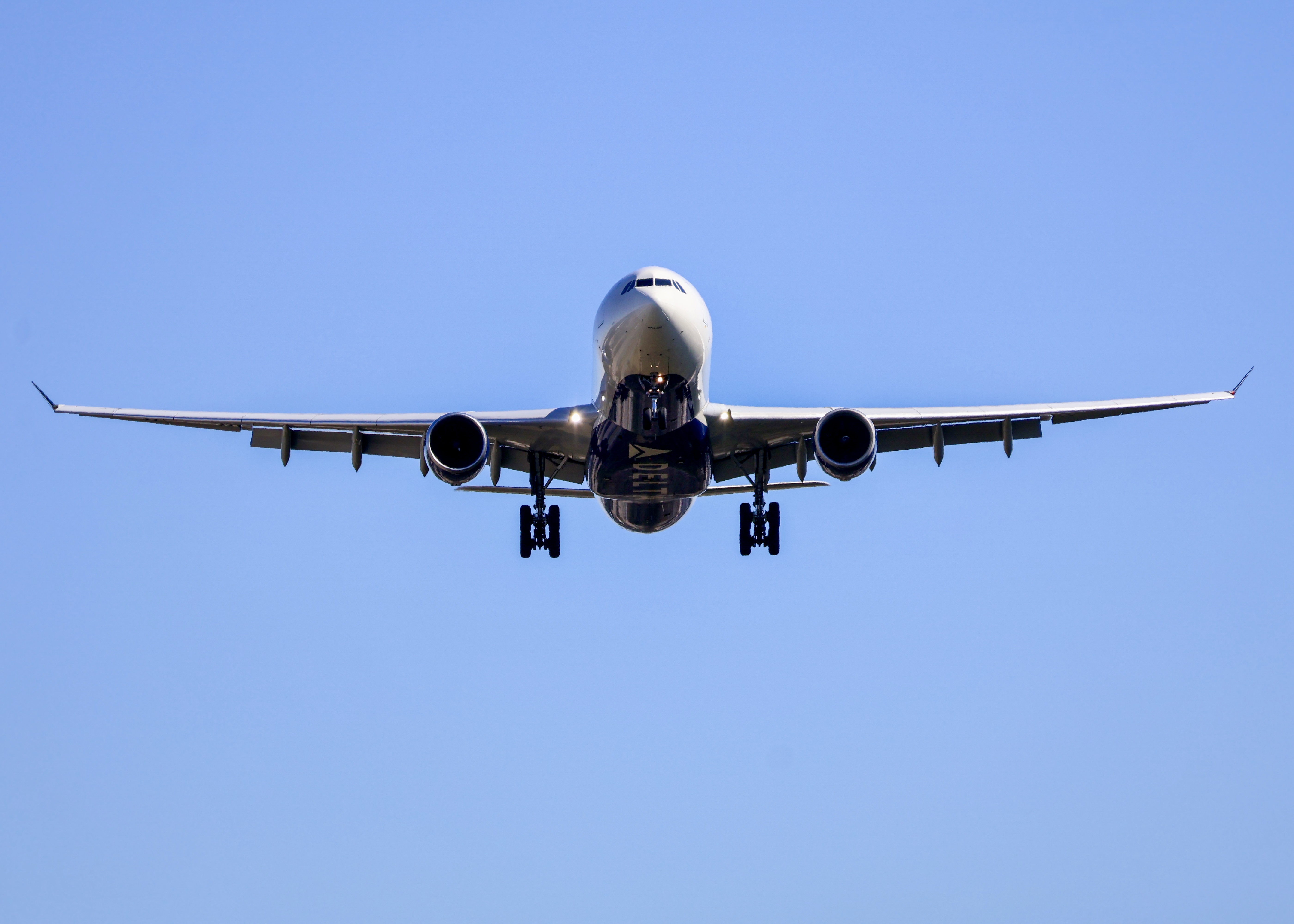
At 23:49 local time on March 29, 2026, Delta Flight 104 — an Airbus A330-300 registered as N813NW — departed São Paulo/Guarulhos International Airport (GRU) bound for Atlanta. On board were 272 passengers and 14 crew members.
Seconds after rotation, the left engine — a Pratt & Whitney PW4168A — suffered a catastrophic failure. Passengers inside the cabin filmed flames and sparks streaming from the engine nacelle as the aircraft struggled to gain altitude. On the ground, ATC controllers watching the departure issued an immediate call: "Delta 104, there is a fire on your wing." The crew's response was swift and professional: "Affirmative, we need to come back."
The aircraft stopped climbing at approximately 4,500 feet. The crew executed an expedited single-engine return, configuring the aircraft for an immediate approach back to Guarulhos. At 23:59 — just ten minutes after departure — Delta Flight 104 touched down safely on the runway it had left moments earlier.
All 286 people on board evacuated without injury. Burning debris that had separated from the failing engine fell onto grass beside the runway, igniting a brush fire inside the airport perimeter. The fire was quickly contained by airport emergency services.
The Aftermath at Guarulhos
Guarulhos International Airport is one of South America's busiest aviation hubs, handling approximately 100,000 flights per year. The engine fire and emergency landing forced a temporary suspension of all operations at the airport while crews cleared the runway and extinguished the brush fire.
The disruption rippled across the region. Twenty-eight flights were cancelled and fourteen others were diverted to alternate airports. Thousands of passengers were stranded or delayed as the airport worked to resume normal operations.
The 19-year-old aircraft — delivered to Delta around 2007 — remains grounded pending investigation. Brazil's Centro de Investigação e Prevenção de Acidentes Aeronáuticos (CENIPA), the country's aviation accident investigation agency, confirmed it has opened a formal investigation into the failure. The U.S. Federal Aviation Administration and the National Transportation Safety Board are also participating, given that Delta is a U.S. carrier and Pratt & Whitney is an American engine manufacturer. A preliminary report is expected in late April 2026.
Delta Air Lines issued a statement describing the event as a "mechanical issue with the aircraft's left engine" and commended the crew for their handling of the emergency.
Understanding Engine Failures in Modern Aviation
Modern turbofan engines like the Pratt & Whitney PW4168A are remarkably reliable machines. The PW4000 family powers thousands of Airbus A330s and Boeing 767s worldwide, and uncontained engine failures — where debris breaches the engine's containment casing — are exceptionally rare. The industry-wide engine failure rate for modern turbofans is approximately one event per 100,000 flight hours.
Engines are designed with heavy containment cases built to catch blade fragments if a turbine disk or fan blade fractures during operation. When this containment works as intended, the failure is dramatic but contained — the engine shuts down, debris stays inside the nacelle, and the aircraft continues flying on the remaining engine. When containment fails, however, high-energy fragments can damage the wing structure, fuel lines, hydraulic systems, or even the fuselage.
The fact that Delta Flight 104's engine shed burning debris that fell to the ground suggests a possible uncontained failure or a fire that propagated through the exhaust path. The investigation will determine the exact failure mode — whether a fan blade, turbine disk, or bearing failure initiated the sequence.
History offers instructive parallels. In November 2010, Qantas Flight 32 — an Airbus A380 — suffered an uncontained failure of its number two Rolls-Royce Trent 900 engine shortly after departing Singapore. Shrapnel severed wiring, punctured fuel tanks, and disabled multiple aircraft systems. The crew of five pilots managed the cascading failures for over two hours before landing safely with all 469 people on board. That outcome, like Delta Flight 104's, was a testament to crew training and aircraft design redundancy.
How the Crew Got It Right
The Delta Flight 104 crew demonstrated textbook emergency response under extraordinary pressure. From the moment ATC called the fire to the moment the wheels touched down, every decision followed the fundamental priority sequence that every pilot learns from day one: Aviate, Navigate, Communicate.
First, they flew the aircraft. An engine failure on departure is one of the most critical emergencies in aviation — the aircraft is slow, heavy with fuel, and close to the ground. The crew maintained control, stopped the climb at a safe altitude, and configured the aircraft for single-engine flight. There was no panic, no hesitation. Training took over.
Second, they navigated. The crew coordinated an expedited return to Guarulhos rather than attempting to continue to an alternate airport. With a fire indication on the left engine, minimizing time in the air was the correct decision. They flew a tight pattern back to the airport.
Third, they communicated. The crew confirmed the fire to ATC, declared their intention to return, and coordinated with the cabin crew for a potential evacuation. Clear, concise, professional.
The entire sequence — from engine failure to safe touchdown — took ten minutes. The Airbus A330 is designed and certified to fly, maneuver, and land on a single engine. Performance is reduced, but the aircraft remains fully controllable. Single-engine approaches and landings are standard training scenarios that airline pilots practice repeatedly in recurrent simulator sessions. This is precisely why airlines invest millions of dollars in simulator training every year: so that when the emergency happens, the crew has already done it hundreds of times.
Lessons for Student Pilots
You will not fly an A330 anytime soon, but engine failures happen in single-engine aircraft too — and in a single, the stakes are even higher because there is no second engine to fall back on. The principles that saved 286 lives over São Paulo apply directly to your Cessna or Piper.
The immediate response is always the same: maintain aircraft control. Fly the airplane first. In a single-engine aircraft, that means immediately pitching for best glide speed — a number you should know cold for every aircraft you fly. For a Cessna 172, it is 65 knots. For a Piper Cherokee, it is 73 knots. That number is your lifeline.
Many flight instructors teach the ABCDE checklist for engine failures: Airspeed (establish best glide), Best field (pick a landing spot), Checklist (attempt engine restart), Declare (announce the emergency on 121.5 MHz), Execute (commit to the landing). This sequence gives you a structured response when your brain wants to freeze.
The Delta Flight 104 crew's calm, methodical response was not luck and it was not natural talent. It was the product of thousands of hours of simulator practice, where they faced this exact scenario repeatedly until the correct response became automatic. As a student pilot, you have the same opportunity. Practice engine-out scenarios regularly with your instructor. On every cross-country flight, identify emergency landing options along your route. Know where the nearest airport is at all times.
Why Simulator Training Matters for Emergencies
You cannot safely practice a real engine fire in a real aircraft. You cannot experience the decision-making pressure of a single-engine return to the field at night, in a heavy aircraft, with 286 people behind you. But you can experience all of it in a simulator — and that simulated experience is what separates a trained response from a panicked one.
Simulators let you build the neural pathways for emergency procedures without the consequences of getting it wrong. You can practice the engine failure, evaluate your response, debrief the mistakes, and do it again. Each repetition moves the procedure from conscious thought to automatic response — which is exactly where it needs to be when the real emergency happens.
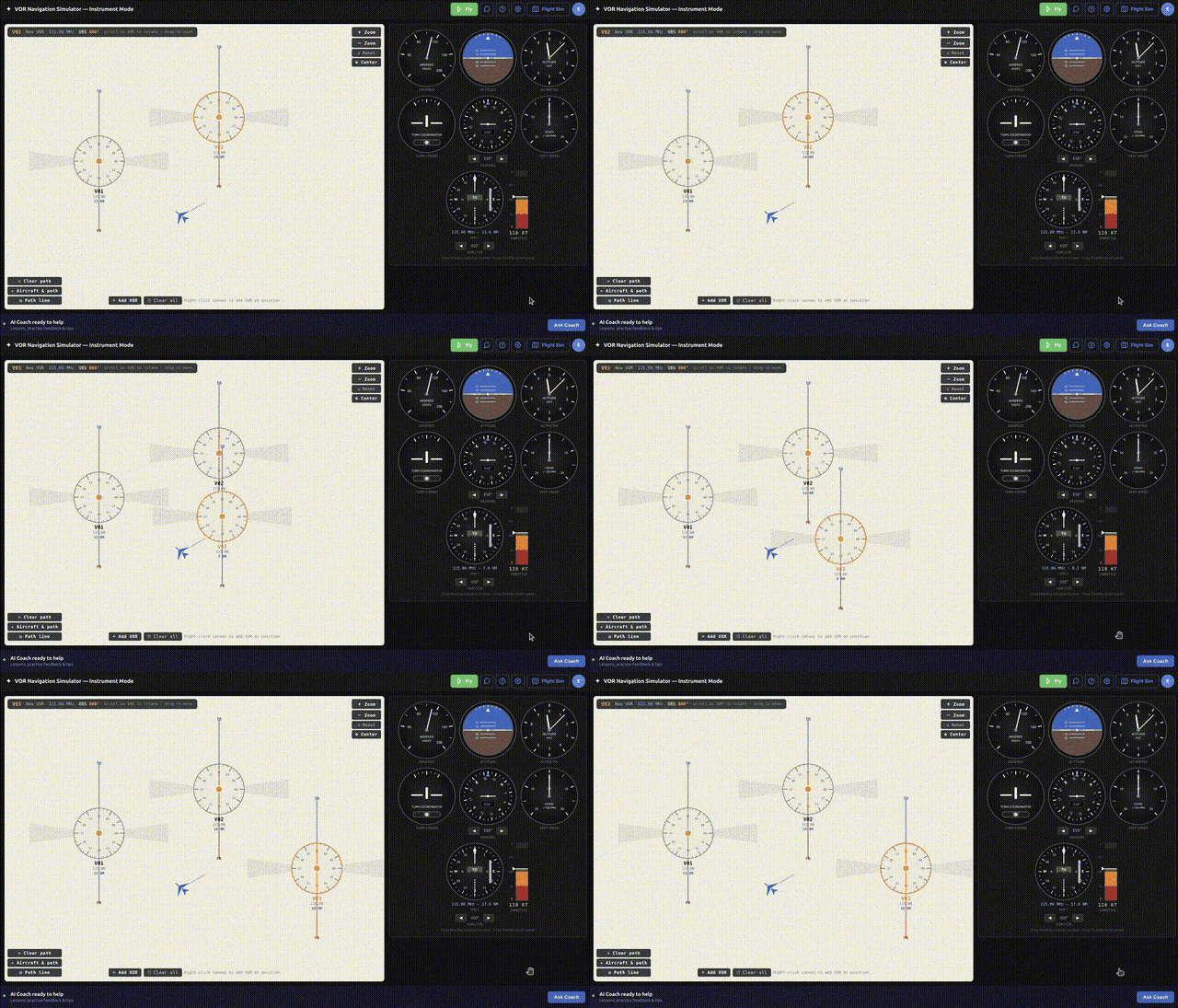
Navigation proficiency plays a critical role in emergencies. When an engine fails, one of the first questions you need to answer is: where is the nearest airport, and what heading do I need to get there? VOR training builds exactly this kind of spatial awareness — the ability to answer "where am I?" and "where do I need to go?" instantly, without fumbling with charts or GPS menus.
Practicing instrument approaches in a simulator means one less thing to figure out when everything else is going wrong. The Delta Flight 104 crew's ten-minute turnaround was only possible because they had done it hundreds of times before in the training environment. The sim gave them the confidence and the muscle memory to execute under pressure.
An Ongoing Investigation
The CENIPA and NTSB investigations into Delta Flight 104 will determine the exact failure mode of the PW4168A engine — whether it was a fan blade release, a turbine disk failure, a bearing seizure, or another mechanism entirely. The preliminary report, expected in late April 2026, will provide the first detailed technical findings.
The aviation community will study those findings carefully. Every major engine failure contributes to the body of knowledge that drives improvements in engine design, maintenance protocols, inspection intervals, and crew training procedures. This is how aviation safety advances — not through perfection, but through relentless investigation and incremental improvement.
For now, the outcome speaks for itself. Two hundred and eighty-six people boarded an aircraft, experienced one of the most frightening emergencies in commercial aviation, and walked away without a single injury. That happened because the crew was trained, the aircraft was designed with redundancy, and the system worked exactly as intended.
The passengers on Delta Flight 104 experienced genuine fear that night over São Paulo. Their relief is earned, and the crew's professionalism deserves recognition. In aviation, we study what went wrong so we can make the system safer — but we also study what went right, because those lessons matter just as much.