What Happened Over Colorado
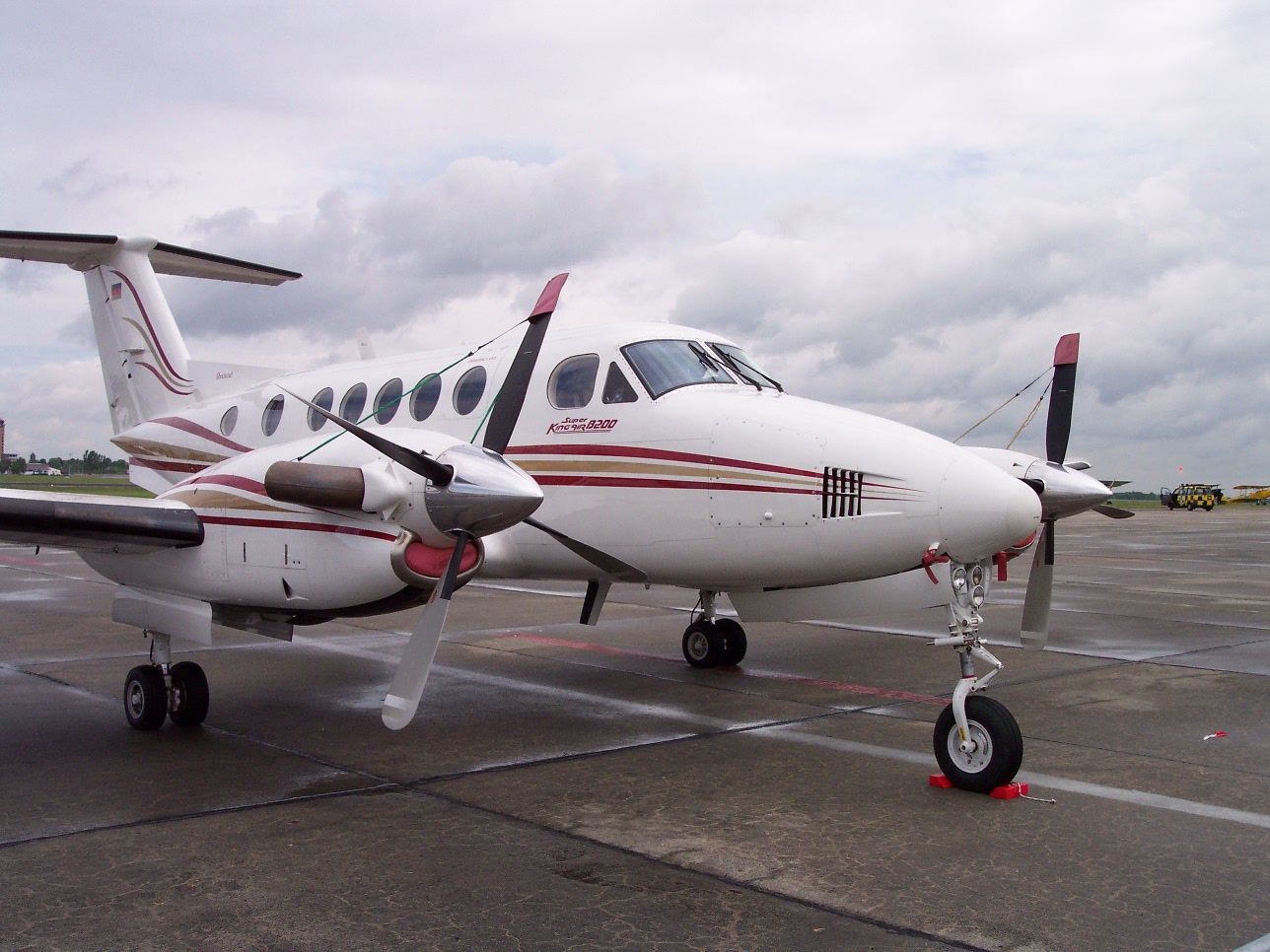
On December 20, 2025, a Beechcraft King Air B200 Super King Air — registration N479BR, operated by Buffalo River Aviation — was on a repositioning flight from Aspen to Denver with two crew members and no passengers aboard. What happened next would mark a turning point in general aviation safety.
During the flight, the aircraft experienced a rapid, uncommanded loss of pressurization. At cruise altitude, this is a serious emergency — cabin altitude can climb dangerously fast, and the onset of hypoxia can impair a pilot's judgment within seconds. The crew faced a critical decision in a compressed timeframe.
Rather than attempt to manage the emergency manually, the pilots made a deliberate and remarkable choice: they activated Garmin Emergency Autoland. It was the first time the system had ever been deployed in a real-world emergency. The technology took full control of the aircraft, selected Rocky Mountain Metropolitan Airport as the nearest suitable field, established communication with air traffic control, and executed a complete approach and landing on Runway 30.
Both crew members emerged from the aircraft unscathed at approximately 14:20 local time. The FAA and NTSB have both opened investigations into the incident, but the outcome speaks for itself — the system worked exactly as designed when it mattered most. The pilots were not incapacitated; they consciously chose to trust the automation, and that decision likely saved their lives.
How Garmin Autoland Works
Garmin Emergency Autoland — part of Garmin's broader "Autonomi" safety platform — is designed to land an aircraft automatically when the pilot cannot. The system can be activated in two ways: manually, by pressing a large red push-button on the center pedestal (protected by a hinged guard so it cannot be triggered accidentally), or automatically, if the system detects that the pilot has become unresponsive.
The manual activation is designed to be accessible to anyone on board. A non-pilot passenger who recognizes that something is wrong can press the button and let the system take over — addressing one of general aviation's most dangerous scenarios.
Once activated, Autoland takes complete control of the aircraft. It evaluates nearby airports based on distance, runway length, current weather conditions, and remaining fuel. It then configures the aircraft for the approach — setting power, flaps, and gear — contacts ATC on the emergency frequency, flies the full instrument approach, lands, rolls to a stop on the runway, and shuts down the engines. The entire sequence is autonomous from activation to engine shutdown.
The system is currently available on several aircraft types: the Piper M600 SLS, Cirrus Vision Jet, Daher TBM 960, and now the Beechcraft King Air 200 and 350 series as a retrofit. Cirrus has also announced that its SR series piston aircraft equipped with the G7+ avionics suite will be the first piston-engine aircraft to offer Autoland capability. The technology is expanding, and the King Air event will almost certainly accelerate that trend.
Why This Matters for Aviation Safety
Pilot incapacitation is statistically rare, but when it occurs the consequences are almost always fatal in single-pilot operations. Pressurization failures at altitude are particularly insidious because hypoxia — oxygen deprivation to the brain — degrades cognitive function progressively. A pilot may not realize they are impaired until they are no longer capable of correcting the situation. The window between recognizing the problem and losing the ability to act can be measured in seconds, not minutes.
General aviation has a significantly higher accident rate than commercial airline flying. Much of that gap is attributable to the single-pilot environment, where there is no redundancy in the most critical system on the aircraft — the human operating it. Autoland fills that gap in a way no previous technology has. It provides a fallback that does not require pilot input, pilot consciousness, or pilot skill.
The King Air event proved that the system works outside of controlled demonstrations and certification test flights. It performed in a genuine emergency, with a real pressurization failure, at altitude, with lives at stake. That distinction matters enormously for regulatory confidence and industry adoption.
Perhaps the most noteworthy aspect of this event is the crew's decision. They were not incapacitated — they were trained, experienced pilots who recognized that the safest course of action was to let the automation handle the emergency. Choosing to trust a system instead of fighting through a deteriorating situation reflects exceptional judgment and training. Their decision will likely influence how future crews are trained to interact with Autoland-equipped aircraft.
Lessons for Student Pilots
Most student pilots will never fly an aircraft equipped with Autoland. But the lessons from this event are universal and directly applicable to every stage of flight training.
Understand pressurization systems and the symptoms of hypoxia. Even pilots who fly unpressurized aircraft at moderate altitudes are at risk. Hypoxia can begin affecting performance as low as 5,000 to 8,000 feet at night, and its symptoms — euphoria, impaired judgment, tunnel vision, tingling — are subtle enough that many pilots do not recognize them without prior training. Knowing what hypoxia feels like, ideally through an altitude chamber or hypoxia awareness course, is one of the most valuable safety investments a pilot can make.
Practice emergency decision-making under time pressure. The King Air crew had seconds to assess their situation, evaluate their options, and commit to a course of action. That kind of decisiveness does not come from reading a textbook — it comes from repeatedly working through emergency scenarios until the decision-making process becomes instinctive. Chair-flying emergencies, running through memory items, and practicing boldface procedures are training habits that every student pilot should develop early.
Trust your training and your systems, but understand their limitations. The King Air pilots trusted Autoland because they understood what it could do. Blindly trusting automation without understanding its capabilities and failure modes is as dangerous as ignoring it entirely. Whether the system is an autopilot, a GPS, or a CDI, the pilot who understands the fundamentals behind the technology will always be safer than the one who simply follows it.
Know your emergency checklists cold. Autoland activated in this case because the crew was trained to recognize when to use it. That recognition — knowing which tool to reach for in which emergency — is the product of thorough ground training and regular review. The time to learn your emergency procedures is not during the emergency.
The Role of Simulation in Emergency Preparedness
You cannot practice real emergencies safely in a real aircraft — that is the fundamental value proposition of simulation. Every hour spent working through abnormal and emergency procedures in a simulator is an hour that builds the decision-making muscle the King Air pilots demonstrated over Colorado.
Scenario-based training is particularly effective. Instead of practicing isolated maneuvers in a vacuum, structured scenarios force you to integrate navigation, communication, systems management, and decision-making simultaneously — just as you would in a real emergency. The cognitive workload of managing a simulated pressurization failure while navigating to the nearest suitable airport is far more valuable than practicing any single skill in isolation.
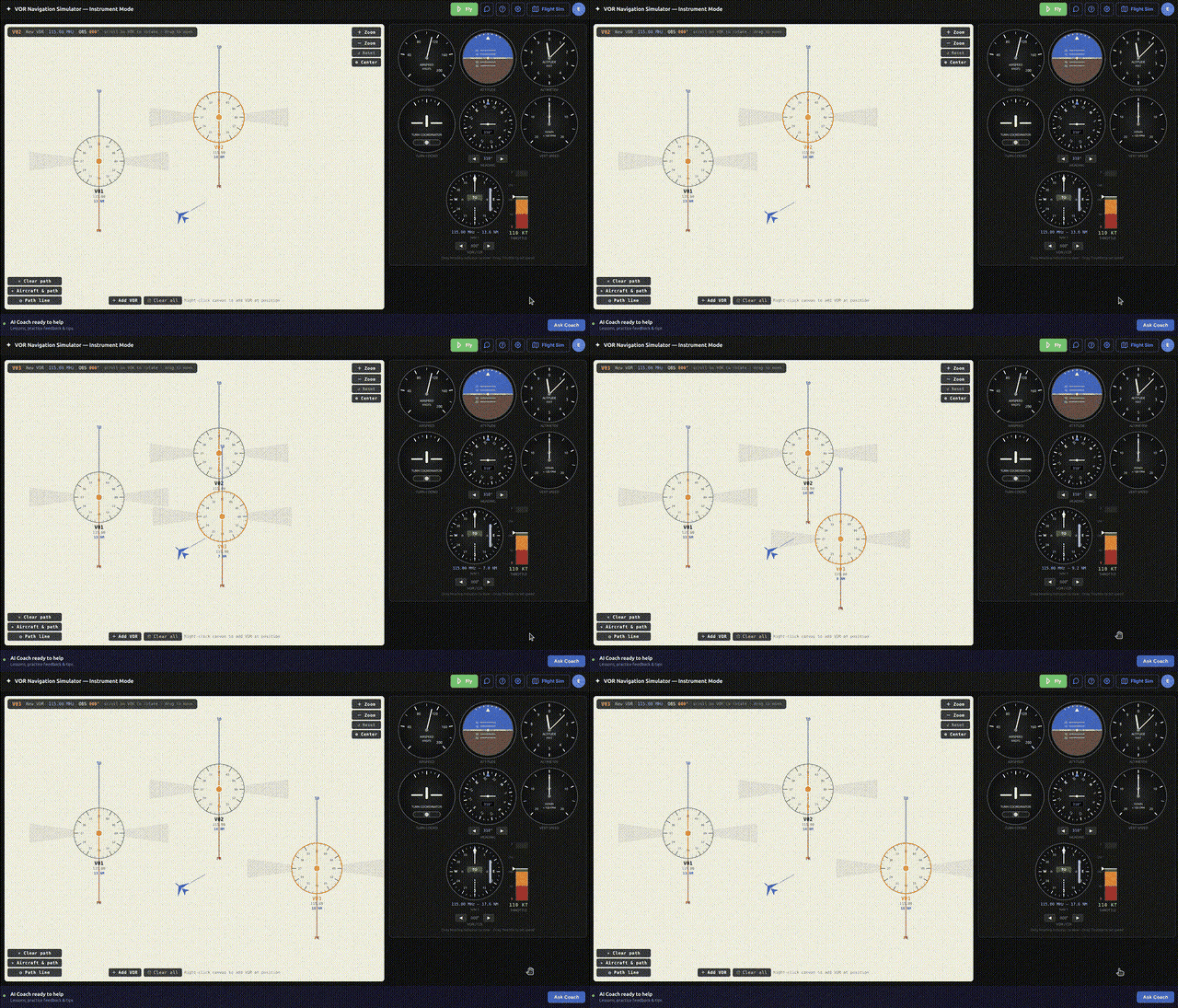
VOR navigation training builds the same spatial awareness that proves critical during emergencies. When something goes wrong, the first questions a pilot must answer are: Where am I? Where is the nearest airport? What heading do I need to get there? Pilots who have internalized the mental model of radials, bearings, and CDI deflection can answer those questions faster — and faster answers mean more options.
Practicing under pressure in a simulator — intercepts, holds, instrument approaches with partial panel — makes real emergencies more manageable because the cognitive patterns are already established. The King Air crew acted on training deep enough to function under stress. That depth comes from repetition, and simulation provides the safest environment for it.
The future cockpit will feature more automation, not less. But the pilot who understands the fundamentals — who can navigate without GPS, fly an approach with a failed flight director, and maintain situational awareness when the screens go dark — will always be the safest pilot in any cockpit.
A New Era for General Aviation Safety
Garmin Emergency Autoland is the most significant safety technology to enter general aviation since GPS. It addresses the single most dangerous failure mode in single-pilot operations — the loss of the pilot — with a system that requires no pilot input to save the aircraft and everyone on board.
The successful deployment on December 20, 2025 will accelerate adoption across the industry. Expect to see Autoland expand to more aircraft types and price points as certification standards mature and retrofit options multiply.
For student pilots, the takeaway is not that technology will fly the airplane for you. It is that the fundamentals of airmanship — situational awareness, systems knowledge, emergency procedures, spatial reasoning, and sound judgment — are the skills that automation supports but cannot replace. The King Air crew survived because they had good training, good judgment, and good technology, in that order. Remove any one of those three elements and the outcome could have been very different.
The era of intelligent cockpit automation has arrived. The pilots who will thrive in it are the ones who invested in understanding the principles beneath the technology — not instead of it, but as the foundation that makes it effective. That investment starts in training, and it never stops.